“The most useful part was learning to turn a vague complaint into a check we could rerun after a change.”
Engineer perspective to request from a future participant
 SmartAItomation
LIVE ONLINE · TWO UPCOMING COHORTS
How do you know your AI actually works?
Learn to evaluate and improve LLM applications. Find failure patterns, build evaluations you can trust, and improve accuracy, reliability and cost.
Analyze.
Measure.
Improve.
BUILD WITH EVIDENCE
A promising demo is a starting point. Reliable AI takes a way to spot failures, measure them and make better decisions about what to change.
Start with AI fundamentals and build an agent. Then analyze its errors, create synthetic evaluation data and use trustworthy evals to improve it.
Leave with a method you can use on this product—and the next one.
WHAT’S INCLUDED
Work through the method together. Bring difficult cases for questions and feedback.
Keep discussing evaluations with the community after your cohort ends.
Revisit course recordings and materials, or join a future edition without another course fee.
Detailed lessons, worked problems, pseudocode, review checklists and answer keys.
Practice each part of the loop with written solutions and recorded walkthroughs.
Submit four assignments, including your final improvement report, for instructor review.
WHAT YOU’LL LEARN
Read the full interaction: history, retrieved evidence, tool inputs, outputs and final answer.
Build one evaluator per error type. Check it against domain-expert labels before trusting it.
Compare prompts, retrieval and agent flows on the same cases. Track regressions, cost and latency.
Probe prompt injection, unsafe tool use and missing permission checks. Decide what needs human approval.
Connect evals to CI, monitor drift and investigate changes in quality, latency and cost.
Prioritize costly failures and show what improved, which risks remain and what the next experiment should test.
Use the same review → evaluate → improve workflow on your next AI product.
THE FOUR-WEEK SYLLABUS
Four Saturday lectures, 10:00–12:00 (Europe/Chișinău, UTC+2). Build an agent, analyze its errors, create evaluation data and improve it. Each lecture includes a practical lab.
Build a working agent and inspect its first complete trace.
Review a varied set of traces, create an error taxonomy and write the rules your evals will check.
Build a versioned evaluation dataset and test whether your judge catches the mistakes an expert sees.
Run a before/after experiment and explain what improved, what regressed and what to try next.
SIX PRACTICAL ASSIGNMENTS
Every assignment includes a worked solution and a short recorded walkthrough. Use the course project or an authorized, anonymized use case from your work.
CHOOSE YOUR COHORT
Weekly live sessions and independent practice: plan around 3–5 hours a week. There are also 10+ hours of optional live office hours across the course.
Saturday lectures · 10:00–12:00
Europe/Chișinău (UTC+2). All lectures are recorded. The separate 10+ hours of office hours will be scheduled with the cohort.
WHO THIS IS FOR
You’re building agents or RAG and want a practical way to debug, test and improve them.
You need to define good behavior, review failures and judge whether a release is ready.
You need to prioritize failures, explain release decisions and give your team a shared quality process.
Learn a shared method you can reuse across products, instead of starting over with every use case.
Before you join: be comfortable using an LLM. Engineers should be able to run basic Python; PMs can pair for the coding labs. An ML research background is not required.
YOUR INSTRUCTOR
11+ years in AI/ML
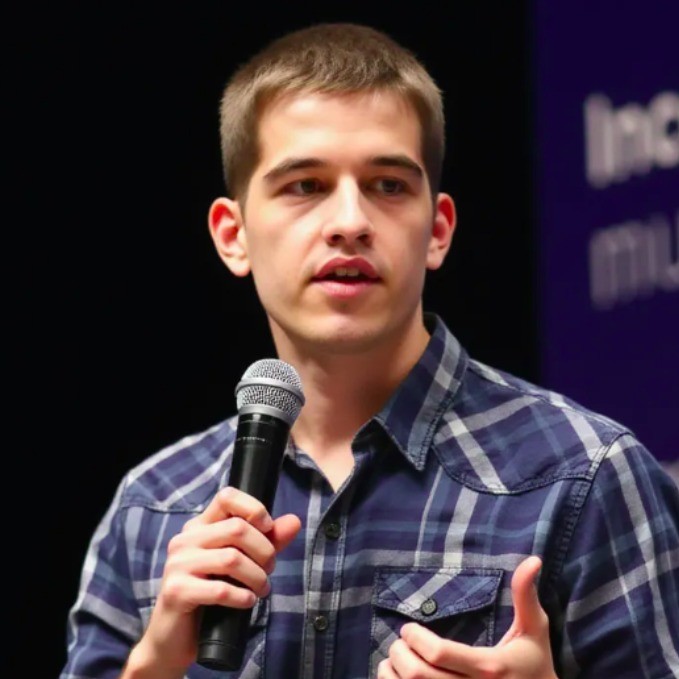
I help engineering teams find what is going wrong in their AI products—and build the evaluations to improve them.
My work spans production projects for startups and enterprises, plus research in multi-agent coordination and computer vision in France and Finland.
Experience on LinkedIn“Start with a failure you can explain.
Then build the test that catches it.”
FREE RESOURCES
Enter your email to download a resource. Delivery is separate from course-update emails.
What to inspect, label and measure before the next release.
Get free resource ↗CSV + PROMPTSA review sheet, fictional traces and viewer-building prompts.
Get free resource ↗TEMPLATE + WORKSHEETDefine a failure, test disagreements and calibrate the judge.
Get free resource ↗INTERACTIVE FLASHCARDSShort questions that test your understanding of the evaluation loop.
Get free resource ↗CODING-ASSISTANT SKILLReusable instructions and templates for your coding assistant.
Get free resource ↗PRACTICAL REFERENCEStraight answers about datasets, judges, metrics and experiments.
Get free resource ↗VIDEO + INTERACTIVE LESSONA short lesson on misleading averages and useful comparisons.
Get free resource ↗Get occasional course news. Confirm your email first; unsubscribe whenever you like.
Get course updates ↗TESTIMONIAL COPY · OWNER PREVIEW
Draft placeholders below are not real student reviews. No ratings, student names or results are being claimed.
“The most useful part was learning to turn a vague complaint into a check we could rerun after a change.”
Engineer perspective to request from a future participant
“Reviewing examples together gave us a clearer way to explain what a good answer should do and where it was failing.”
Product manager perspective to request from a future participant
“I wanted a process our team could keep using, from reviewing traces to comparing changes on the same cases.”
Engineering lead perspective to request from a future participant
LEARN WITH YOUR TEAM
A FEW PRACTICAL DETAILS
Choose 21 November–18 December 2026 (€500) or 19 December 2026–15 January 2027 (€1,000). Both run for four weeks. Lectures are on Saturdays, 10:00–12:00 Europe/Chișinău (UTC+2). November lecture dates: 21 & 28 Nov, 5 & 12 Dec. December lecture dates: 19 & 26 Dec, 2 & 9 Jan. Office-hour times will be arranged separately.
Plan around 3–5 hours weekly for live sessions and independent practice. Optional office hours add 10+ hours across the course. The assignments include solutions and recorded walkthroughs.
Keep access to the course recordings, materials and private Discord community. You may also join future live editions of this course without another course fee; register with Ion before each cohort. See the course terms for scope.
Course sessions are recorded, with lifetime access. Use Discord for questions and join office hours when you can. Meeting links and recordings are provided to enrolled participants.
Engineers should be comfortable running basic Python. PMs and domain experts can focus on reviews, test cases and release decisions, pairing for coding labs. No ML research background is needed.
It is not a general introduction to using chatbots, a model-training research course or a promise to ship a complete product in four weeks. You should be ready to inspect examples, write review notes and test changes.
No. Start with the supplied materials. Learn how to build synthetic cases from roles, features and scenarios, then use expert review to check them before trusting the labels.
An inspectable agent, reviewed error taxonomy, versioned evaluation dataset, calibrated evaluators and a before/after improvement report. Your results will depend on your cases and implementation; the goal is a method you can reuse.
Python, JSON/CSV, a small agent/tool loop, code assertions and model-API calls. Use Codex or Claude to help build interfaces and scripts. The method is framework-independent; any optional model-provider usage is billed by your own provider account and is not included in tuition.
Yes. Inspect tool calls and retrieval separately from answer quality. Test permissions, prompt injection, unsafe actions and human escalation, then connect checks to CI and production monitoring.
Submit at least four of the six assignments, including the final improvement report. Ion reviews your work before issuing your named certificate. It is a completion certificate, not an accredited qualification.
Yes. Use the reimbursement email template and the payment confirmation. Book 2–20 seats together for 10% off; reply to the confirmation with participant details. Contact Ion for larger groups or private delivery.
You get a connected practice sequence, expert review, office hours, community discussion and worked solutions. The focus is making your evaluations reliable enough to guide actual engineering decisions.
No. This is an independently developed SmartAItomation course taught by Ion Moșnoi. The listed tools and public references do not imply affiliation or endorsement.
BUILD THE FEEDBACK LOOP
Four weeks. One practical method you can keep using.
Choose your cohort