Choose a smaller task than “get ready”
Begin with the moment that becomes confusing. A whole morning schedule can hide the actual transition: leaving a construction game to get shoes. Write what the person needs to understand, not a judgment about their behavior. Choose one observable action with a clear finish.
The Norfolk NHS guidance describes two visually represented activities: first and then. Objects, photos, pictures or symbols can communicate the sequence. That supports a communication format, not a claim that our app was clinically tested or that every child will respond in the same way.
Choose recognizable images with the person and keep the spoken words consistent with the pictures. A detailed decorative drawing may be less useful than a familiar photo. Ask or observe whether the picture means what you intend; do not assume recognition because an adult likes the artwork.
Worked transition: two blocks, then a real next activity
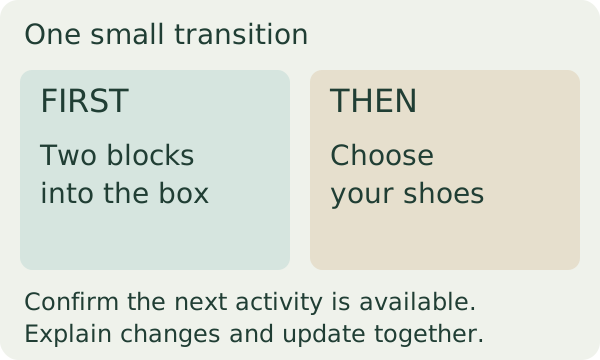
Fictional situation: a child is building on the floor before going outside. “Tidy everything” is too vague for this first attempt. The proposed first action is “Put these two blocks in the box.” The next activity is “Choose your shoes.” The adult has the box and shoes ready. This is a small communication example, not a behavior protocol.
| Part | Vague wording | Concrete example | Check before using |
|---|---|---|---|
| First | Tidy up | Put these two blocks in the box | Point to the actual blocks |
| Finish | When you are good | These two blocks are in the box | No hidden extra task |
| Then | Something fun | Choose your shoes | Shoes available now |
| Change | Pretend the plan stayed the same | Shoes unavailable: explain and update together | Do not display an impossible next step |
Show the board before the transition and pair it with brief, consistent words. Acknowledge the first action when it is finished. Do not keep adding extra actions under the same first card; that changes the promise the picture communicated.
If the next activity cannot happen, say so and update the board with the person. Keep a backup wording such as “The shoes are not here. Let’s choose what happens next.” Do not present an unavailable activity as an inducement.
Record understanding, not a success score
Afterward, note what was understood, what needed explanation and what was missing. “Pointed at shoes; needed help finding the box” is more useful than “failed.” Separate a picture mismatch from an unavailable object or an action that was too large.
Respond to distress and communication needs rather than escalating the board into a demand. Do not withhold basic needs or support behind completion. If transitions remain difficult, discuss the person’s needs with appropriate caregivers or professionals instead of assuming more pictures will solve the cause.
The CSV helps compare one small revision at a time. Keep the same transition if you are checking a new picture, and note other changes. It is an observation aid, not a diagnostic instrument or evidence of a treatment effect.
Build manually or review optional PictoCue suggestions
PictoCue’s current listing includes first/then boards, editable words/pictures/order, manual building, Use Mode and PDF/print/sharing. Optional sentence-to-board drafts require explicit sharing consent; review every generated step before saving. The manual builder remains available.
We publish PictoCue. Its current description does not enumerate all free and paid allowances; check the installed terms. Do not enter unnecessary personal details into optional AI. Read the current privacy information and consent disclosure.
The parent explains a broader visual morning routine. This guide instead defines the end condition and the change-of-plan path for one transition; the independent worksheet does not import a board into the app.
If the method fits your task, explore PictoCue’s listed features on an iPhone. Check current features and plans before downloading.
See PictoCue for iOSDownload the free worksheet
Use the CSV in Numbers, Excel or a spreadsheet editor. One fictional transition and a blank row; not a treatment protocol or outcome score. Replace them with your own observations. The CSV is separate from the app and no email is required.
Questions answered
Does the board guarantee cooperation?
No. It communicates a sequence and cannot establish why someone is distressed.
What if the next activity is unavailable?
Explain and change the plan openly; do not keep displaying a promise you cannot fulfill.
Can I use a paper version?
Yes. Use recognizable pictures or objects and the same clear words without an app.
Continue with PictoCue on iOS
Use the App Store listing to check compatibility, privacy information and current plan terms. A free download may offer paid features.
Download PictoCue for iOSSources and product details
- Norfolk NHS: First and Then BoardUK speech/language guidance read October 18, 2026; no app efficacy claim.
- PictoCue on the App StoreCurrent US App Store product description; checked October 18, 2026.
Editorial method: primary guidance, a current Apple listing, an original worked example and an independent critique. No search ranking, install or outcome result is claimed.